
Why Pregnancy Loss is NOT a ‘Niche’ Topic
Someone said it to me again last week. “But pregnancy loss is such a niche topic.”
I want to gently, firmly, and with statistics in hand, push back on that.
Because if you know five or more women, you almost certainly know someone who has experienced pregnancy loss. You probably know more than one. And the chances are, you had absolutely no idea.
The Numbers Don’t Lie
Studies, including research from the March of Dimes, suggest that around one in four known pregnancies ends in loss. That includes miscarriage, stillbirth, termination for medical reasons, and other pregnancy complications.
And that “known” qualifier matters. The vast majority of miscarriages happen before a person even realises they’re pregnant. A missed period, a late cycle, a loss that never gets named or counted. So when we say one in four known pregnancies, we’re already working with a conservative number.
Do the simple maths: five women in your life means at least one of them has experienced pregnancy loss. Probably more. Sisters. Mothers. Aunts. Colleagues. Friends. They may never have said a word.
Pregnancy loss is not a niche topic. It is a women’s health issue that touches nearly every social circle, every workplace, every family.

It’s Not Only About the Person Who Was Pregnant
The statistics are drawn primarily from data on cisgender women, but pregnancy loss reaches far beyond that. It touches LGBTQIA+ communities too, where the silence and isolation can run even deeper. Inclusive support isn’t a nice-to-have — it’s essential.
And regardless of gender or identity, pregnancy loss ripples outward. It affects partners. Parents. Siblings. Friends. Workplaces. It affects how people show up in relationships for years, sometimes decades, after a loss.
I’ve had a man tell me he can still picture the kidney dish in the doctor’s office from his wife’s miscarriage — more than twenty years later. I’ve had a woman tell me about her daughter’s IVF struggles and how it was affecting her, as the grandmother. Pregnancy loss is not one person’s private grief. It’s a communal experience that we’ve collectively agreed not to talk about.
Why We Don’t Talk About It (And Why That Has to Change)
There’s a social norm that you don’t share a pregnancy until you’re past twelve weeks. It’s well-intentioned — a kind of protective silence for something still fragile. But the unintended consequence is that when loss happens in those early weeks, the person experiencing it has no language, no community, and no permission to grieve openly.
And when they do share, far too often they’re met with:
- “At least you know you can get pregnant.”
- “Everything happens for a reason.”
- “Just think positive.”
We would never say to someone who had lost a partner: “At least you got to be married.” The thought is absurd. And yet we say these things to loss parents without a second thought.
Here’s what makes it worse: the medical system often reinforces this. From the moment of a positive test, everything is framed around the baby. Congratulations. You must be so excited. How’s the baby? And then, when a pregnancy ends in loss, the language shifts. Suddenly it’s “products of conception” and “foetal tissue.” What was a baby last week is now a clinical term.
That linguistic whiplash sends a message: you were allowed to feel joy, but you are not allowed to feel grief.
So loss parents learn to carry it quietly. And the people around them have no idea that their friend, their colleague, their sister is walking around with something enormous inside her, completely unseen.
Visibility Is the Gift
This week, I recorded this video just before International Women’s Day 2026, with its theme of Give to Gain — the idea that when we give generously, we create a ripple effect that lifts everyone.
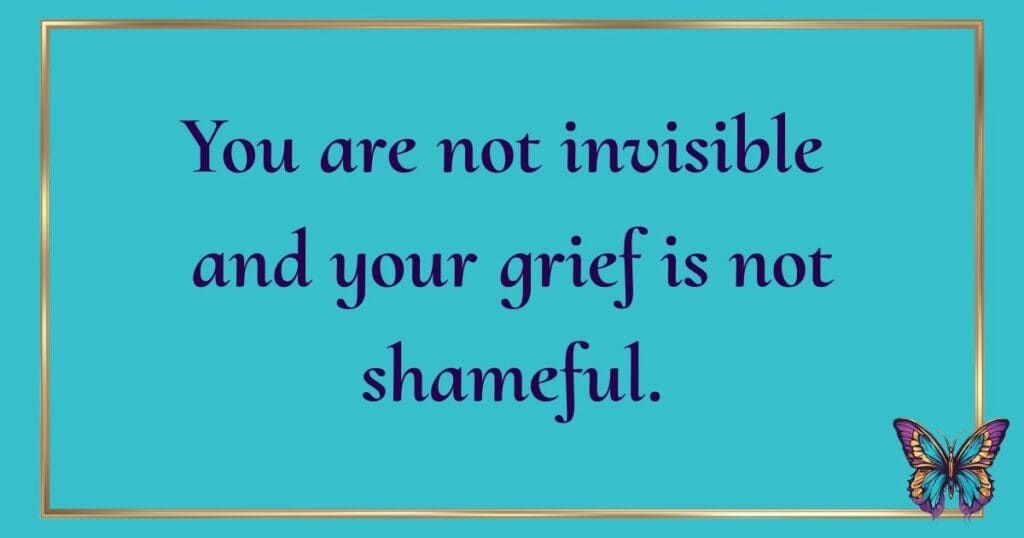
Talking about pregnancy loss is an act of giving visibility. When you share a video like this, when you check in on a friend after her loss, when you simply say “I was thinking of you” — you are giving something that costs nothing and means everything. You are telling a loss parent: you are not invisible, and your grief is not shameful.
You don’t have to have experienced pregnancy loss to be part of this shift. You just have to be willing to hold the conversation.
What You Can Do Right Now
Share my video — especially with someone who works with women, or someone you think might need it.

Check in. If you know someone who has experienced pregnancy loss, a simple message matters more than you know. You don’t need the right words. “I’ve been thinking of you” is enough.
Read All of These Lines. It’s my memoir about my journey through six pregnancy losses from eight pregnancies. It’s written to help loss parents feel less alone — and to help the people around them understand what it actually feels like from the inside.
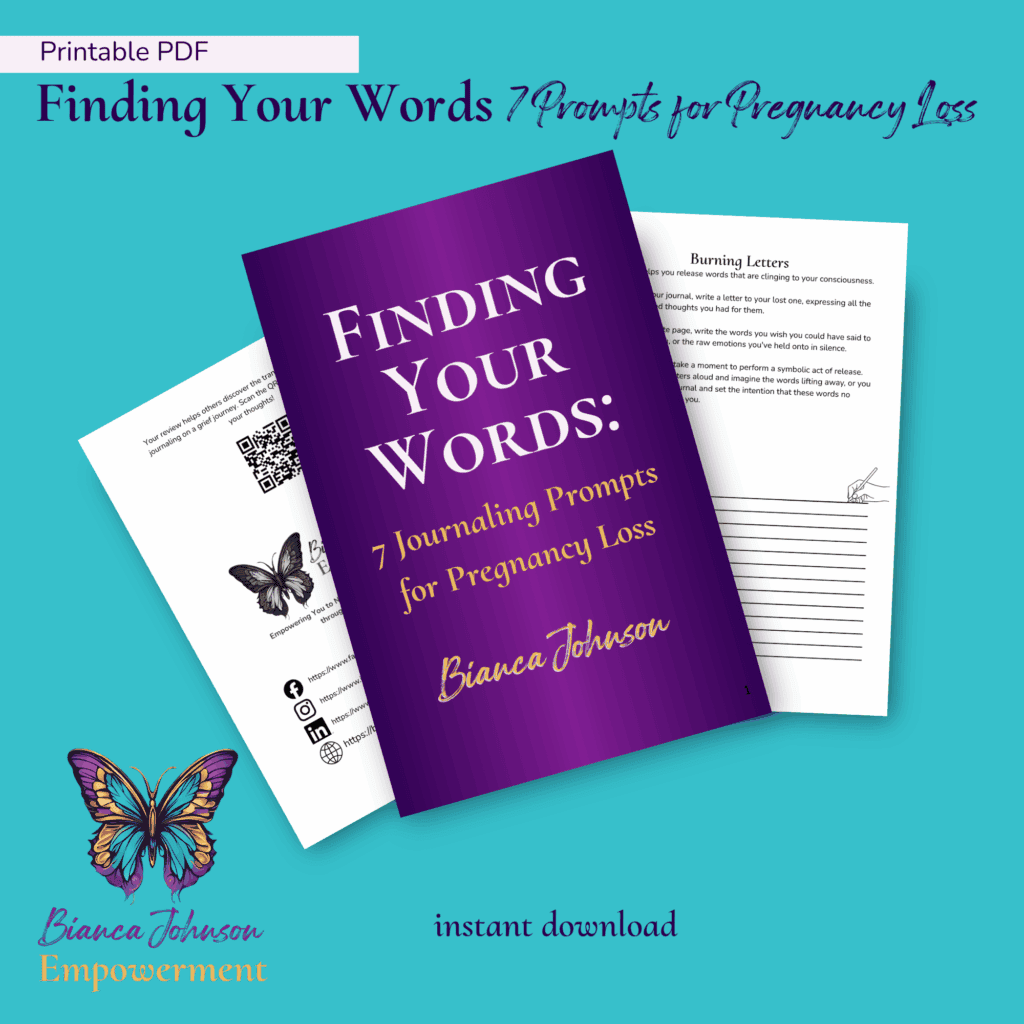
And if you’d like somewhere to start with your own story, my free journaling guide is waiting for you:
📝 Download Finding Your Words — free journaling prompts
Pregnancy loss is not a niche issue. It is a human issue. And the more we talk about it — openly, honestly, without shame — the less alone every loss parent feels.
That’s why I’m here.
☕ Ready to talk? Book a Transform Call

Ready to Find Yourself Again After Pregnancy Loss?
Sign up for the series for FREE. Join at any time and receive the daily emails to guide you back to yourself.
Connect on Socials
You can also connect with me on Facebook, Instagram or LinkedIn where I share more about finding peace, embracing your truth, and living an anti-hustle life.
