
Parenting After Loss: The Anxiety, Guilt and Fears Nobody Warns You About
Everyone expects pregnancy after loss to be hard. The scans, the milestones, the holding your breath right up until the moment you hear a cry.
Nobody warns you that the hard part doesn’t end there.
I’ve had 8 pregnancies, 6 losses, and 2 rainbow babies. I’ve also spent 12 years supporting loss parents through Rainbow Hope South Africa. And if there’s one thing I hear over and over again, it’s this: I thought I’d feel better once my baby was here. Why don’t I feel better?
So let’s talk about it.
The guilt of not enjoying motherhood
By the time I had a full-term pregnancy, it was my fourth pregnancy in a single year.
Kyle was desperately wanted. He was also not an easy baby. He didn’t sleep. He screamed in the car from the day we brought him home until he was almost 2. He was hard, in the specific, exhausting way that only a difficult infant can be hard.
And I felt guilty about every second of it.
I’d wished so hard for that baby. So why didn’t I like being his mother?
Then I felt guilty about feeling guilty. Because surely I wasn’t allowed to struggle — I’d wanted this. I should be grateful. Other moms could complain freely, but I felt like I’d forfeited the right to find it difficult.
I call bullshit on that.
Wanting a baby doesn’t make lack of sleep easier. It doesn’t make colic easier. It doesn’t make a screaming child in the car easier. Loss doesn’t mean you can’t dislike the hard parts of parenting — it means you’ve been carrying extra weight before you even got there.
Both things can be true at the same time.
You can love your child with your whole heart, be so grateful they’re here, still miss the baby that didn’t happen, and also not be enjoying this specific moment with your child. All four of those things can live in you simultaneously. That’s not failure. That’s complexity. And complexity is completely normal.
The fears that showed up
I tell this story in my book, in a chapter called Wrecking Ball (which, honestly, is what Kyle felt like at the time).
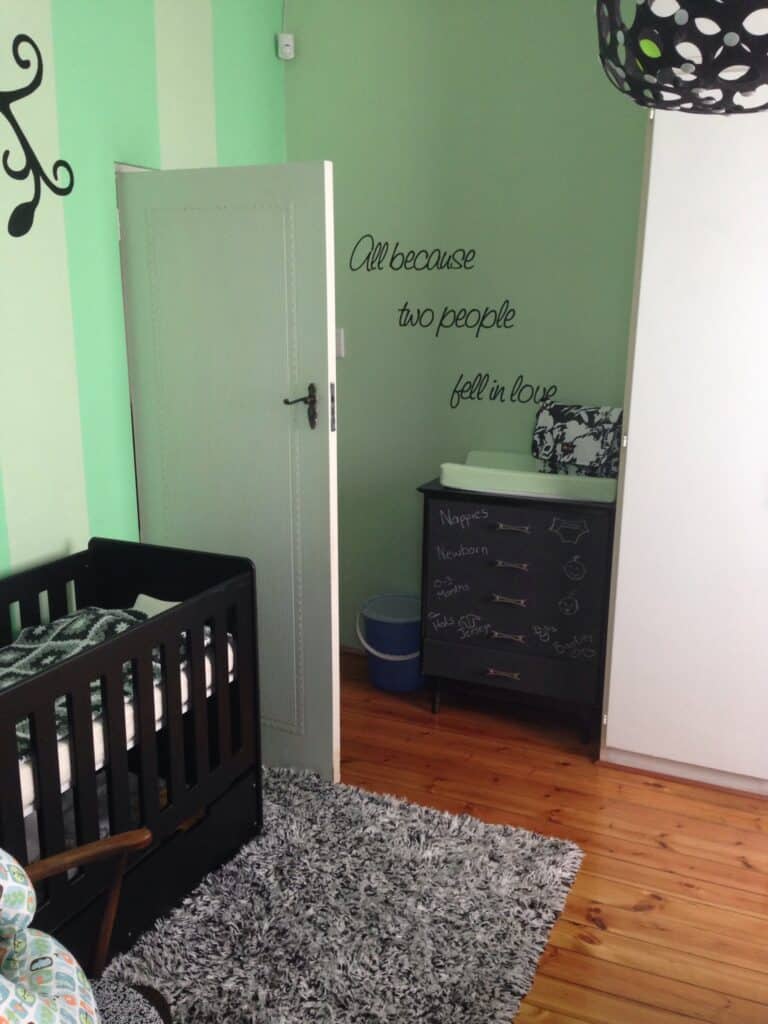
The first time he slept through the night, he was about 10 months old. I woke up in the morning, realised we’d both slept, and my first thought wasn’t relief.
It was panic.
I was convinced he’d died of SIDS. I couldn’t be the first person to go into his room. Brian had to go in, because if I was first and something had happened, I think I would have fallen completely apart.
He was fine. He’s almost 12 now. But even now, if I don’t hear him before I’m up on a weekend morning, I still get that flicker of something. A lot less often than when he was small, but it’s still there.
Parental anxiety after loss shows up in strange places too. Every intersection, I’d imagine potential accidents. Realising midway through a meal that I’d given him undercooked chicken. Seeing an expired date on medication and convincing myself I’d already given it to him. The anxiety didn’t just live in the nursery, it spread into my whole life.
I was still checking every time I went to the toilet for blood or spotting — even when I wasn’t pregnant. Even years later. Even now, in perimenopause with the unpredictable cycles, it’s just one more thing I’m scanning for.
Pregnancy loss rewires your brain
There’s something Leonie Dawson talks about: when normal people hear hoof beats, they think horses. Once you’ve experienced loss, your brain almost always goes to zebras.
You’ve been on the wrong side of statistics too many times. So your nervous system learns to brace. You wait for the other shoe to drop, because the shoe has dropped before — more than once.
That hypervigilance isn’t a character flaw. It’s not overreacting. It’s a trauma response. And it needs compassion, not fixing.
What actually helped
Giving myself permission. Permission to find parenting hard even after desperately wanting this child. Two things can be true simultaneously — that’s not something you need to resolve or choose between.
Therapy. I saw my therapist throughout Kyle’s pregnancy and for the best part of the year after he was born. It wasn’t optional, it was necessary. And I’m glad I didn’t try to white-knuckle my way through it alone.
Community. When I couldn’t find a loss parent community that felt right for me, I created one. Rainbow Hope South Africa has been running for 12 years. Find your people, and if you can’t find them, build them.
Being honest with my partner. Telling Brian specifically what I needed — including that I couldn’t be the first one to check on Kyle in the morning. Partners can’t support what they don’t know about.
Naming it. Parenting after pregnancy loss anxiety is real. It can be made worse by perinatal anxiety disorders. And it doesn’t just disappear the moment your baby arrives. When you can name it as a trauma response rather than a personal failing, something shifts.
You’re not broken. You’re rewired.
If you’re parenting after pregnancy loss and you’re struggling, please know you are not alone.
Your anxiety makes sense. You’ve been on the wrong end of statistics already. Of course your nervous system is on high alert — it’s learned to protect you.
And as your life grows, you grow around your grief. Your parenting grows around your loss parent identity. You find your footing, slowly, in your own time.
If any of this resonates, Chapter 6 of All of These Lines is dedicated to exactly this — the messy, complicated, deeply human experience of parenting after pregnancy loss. You can find the book here.
If you’re in the thick of it right now and you need someone to really see what you’re carrying, a Transform Call might be the next step. It’s an hour with me, where you don’t have to explain yourself from scratch.
You’re doing better than you think. Your rainbow babies are lucky to have you.

Ready to Find Yourself Again After Pregnancy Loss?
Sign up for the series for FREE. Join at any time and receive the daily emails to guide you back to yourself.
Connect on Socials
You can also connect with me on Facebook, Instagram or LinkedIn where I share more about finding peace, embracing your truth, and living an anti-hustle life.
